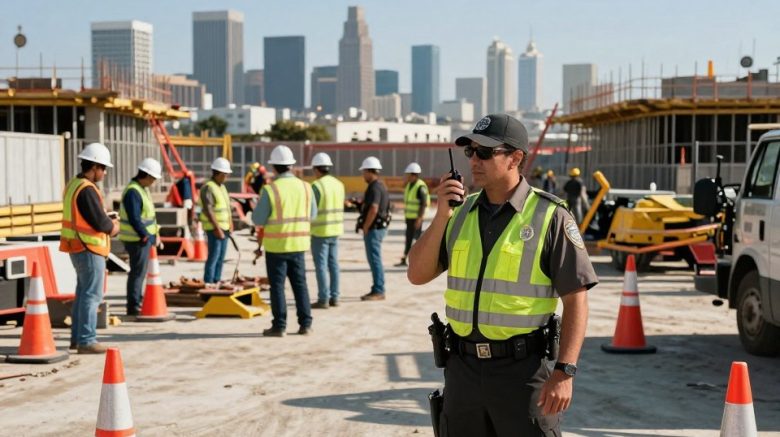
Locating the best security for an active construction site can feel daunting. The resource assists owners and managers assess and hire reputable providers for construction site security in Los Angeles and adjacent areas. Guardian National Security provides 24/7 security coverage with customized packages, on-site security guards, movement sensors, and prominent “No Trespassing” notices. Security teams document incidents, vehicle arrivals, and material activity so supervisors remain updated.
View Details About Private Security Bodyguard Los Angeles
You can expect a mix of fixed-post guards and vehicle patrols, GPS tracking, Detex time clocks, and two scheduled management visits per rotation. Such steps cut down on theft, property damage, trespassing, and fire or accident risks.
Leverage this page to match your project phase and off-hours risk to services like entry control, monitoring technology, or fire watch. Get a pricing proposal and request a site-specific assessment to set clear deliverables and the next steps.
Main Takeaways
- Seek out licensed, insured providers with local experience.
- Emphasize uniformed guards plus mobile patrols and electronic verification.
- Insist on clear documentation: incident logs, truck logs, and material logs.
- Confirm GPS/time-clock verification and routine manager check-ins per rotation.
- Ask for a proposal and a site walk for the strongest outcome.
Construction Site Security In Los Angeles: Why It Matters For Busy Job Sites Today
Ongoing construction projects face overnight exposures that can derail timelines and costs. Public-street exposure, high pedestrian traffic, and compact urban parcels increase the likelihood of stealing and property damage once workers leave for the day.
Open layouts, insufficient lighting, and stored materials leave many jobs simple targets after hours. Unapproved entry and loitering often pick up when eyes-on-site goes away, and that leads to accidents, fire risks, and high-cost claims.
Expensive Outcomes And Liability
Missing tools and gear or broken equipment causes schedule slippage and rework tasks. Asset downtime ripples across subcontractor timelines and drives up project costs.
Unapproved access can result in serious injuries and liability claims, disrupting permitting and insurance renewals. These are business risks as much as safety risks.
How Visible Guards Deter Crime
A clearly identified security guard at access points and along the perimeter changes an opportunist’s calculus. A visible presence reduces loss and damage and gives crews assurance when they come back each morning.
Effective site security combines people (guards), process (entry control and reporting), and tools (lighting, cameras, sensors) to secure workers, authorized visitors, and the owner’s investment.
Typical Risks On Los Angeles Construction Sites
Urban building projects often see a range of expected and sudden risks after hours. Understanding the main risks allows owners select reliable security and security services.
Theft Of Tools, Copper, Materials, And Machinery
Stealing is a leading concern at many job sites. Small tools and copper wire disappear quickly, often in a single night.
Machinery theft causes the largest slowdowns. Sourcing replacement machines slows schedules and raises costs across crews.
Graffiti And Vandalism That Disrupt Timelines
Tagging and purposeful destruction do more than affect curb appeal. They force stoppages, more inspections, and remediation to satisfy permit or community standards.
Unauthorized Access, Injuries, And Legal Exposure
Curious pedestrians, risk-takers, and opportunistic intruders bring serious exposure. Unauthorized entry can result in major injuries and expensive claims.
Off-Hours Fire Hazards From Materials And Staged Gear
Exposed combustibles, temporary power hookups, and unwatched equipment elevate off-hours fire risks. Rapid detection and action help prevent bigger losses and claim complications.
Insider Loss And Shrinkage
Employee pilferage is a common, often-missed risk on big sites. Steady logging, access controls, and routine patrols minimize shrinkage and help audits.
Next: the following sections cover how professional guard teams and monitoring tools prevent, identify, document, and handle these issues.
Construction Site Security Companies Los Angeles: What The Best Providers Should Deliver
Selecting the right security partner begins with defined, checkable benchmarks that safeguard your job and financial plan.
Fully Licensed And Insured Guard Company Standards
Require proof of local licensure, robust insurance, and a written scope. Agreements should outline duties, shift length, and reporting requirements.
Construction-Focused Services Built For Real Job Sites
Choose teams skilled in construction safety, wearing site-ready uniforming and working from post orders that match ongoing operations.
Flexible Coverage: Days, Nights, And 24/7 Support
Fit scheduling to your build phase. Daytime guards supports entry control; night patrols reduce theft; round-the-clock coverage works for high-risk or extended projects.
Local Experience Throughout Los Angeles County And Surrounding Areas
Choose a company with neighborhood experience. Local teams tune patrol patterns, escalation procedures, and reporting to area crime and traffic rhythms.
- Operational commitments: oversight, manager check-ins, and usable daily reporting.
- Bundled options: fixed posts + patrols + monitoring in one scope.
- Ask for comparable proposals so quotes match on scope, timing, and deliverables.
On-Site Security Guard Coverage For Construction Projects
Visible experienced guards establish defined entry points and predictable access for crews, deliveries, and authorized visitors. This controlled approach minimizes chaos and limits unauthorized access that causes theft or schedule impacts.
Standing Guards At Gates And Entry Points
Posted guards at gates act as a visible deterrent and a controlled access point. They log arrivals, verify IDs, and stop unauthorized people from entering.
Entry Control For Workers, Contractors, And Deliveries
Access procedures include ID verification, delivery confirmations, and vendor schedules. Guards confirm authorized workers before allowing entry to minimize shrink and traffic conflicts.
Visitor And VIP Escorting
When needed, escorts guide visitors along safe routes and keep them clear of live work areas. That reduces interruptions and cuts contact to job-site hazards.
Boundary Checks And Patrols
Scheduled perimeter checks inspect fencing, storage areas, laydown yards, and high-risk zones for interference or safety hazards. Catching issues early stops small issues from becoming liability claims or project stoppages.
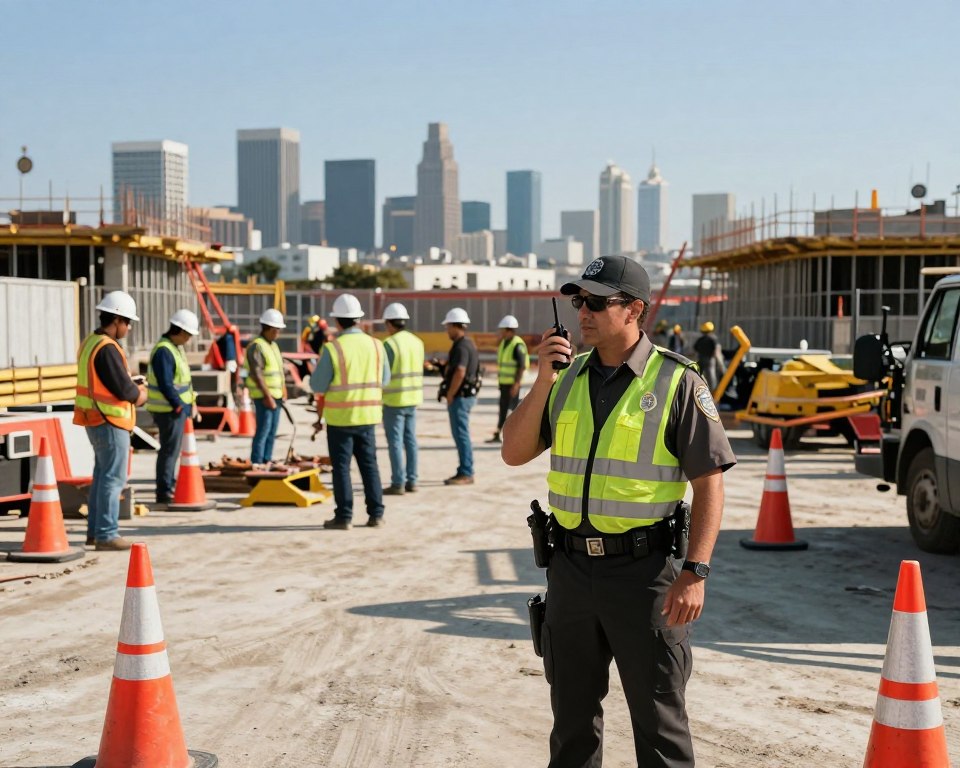
Job-ready guard teams arrive prepared for field conditions with high-visibility vests, hard hats where required, and clear instructions. Guard services work with site management through escalation routes and logged reports, creating a coordinated unit that protects schedules and assets.
Mobile Patrols And Site-Wide Monitoring For Broader Protection
For projects with multiple lots, mobile patrols provide agile, cost-aware coverage. Patrol vehicles allow teams to cover several properties on a single route instead of covering multiple fixed posts.
Mobile Vehicle Patrols For Large Sites Or Multiple Locations
Vehicle patrols work better than fixed posts when footprints are large, entry points are numerous, or nearby projects cluster together. They are well-suited where overnight risk is moderate and budget limits 24/7 fixed posts.
Scheduled Routes To Check Gates, Lighting, And Equipment Zones
Patrol routes are designed, not left to chance. Each round checks gates, perimeter fencing, lighting, and high-value equipment zones to catch tampering or hazards early.
- Frequency and route design change with project needs and neighborhood exposure.
- Monitoring boosts accountability—GPS and time clocks validate rounds and highlight gaps.
- Reliable radio/phone links between patrol units and on-site contacts speed escalation when activity is detected.
Bottom line: mobile patrols can lower costs while keeping consistent deterrence across areas. Match them with monitoring to verify performance and eliminate coverage gaps.
Technology And Deterrents That Strengthen Site Security
Smart, budget-friendly tools can reduce blind spots and increase on-the-ground patrol effectiveness overnight.
Movement Sensors And “No Trespassing” Signs
Motion-activated sensors pick up movement in dim corners, access gaps, and storage locations. They activate lights or alerts so guards can check quickly.
Clear “No Trespassing” signage establishes legal expectations and discourages casual intruders before problems snowball.
Cameras Near Public Streets And Busy Corridors
Cameras add a visible deterrent where pedestrian traffic is heavy. They also record events for follow-up, insurance documentation, and police review.
GPS Tracking And Guard Verification Tools
Time clocks and Detex-style GPS systems verify patrol timing and route completion. This proves service delivery and helps managers identify coverage gaps.
| Tool | Primary use | Operational outcome |
|---|---|---|
| Movement sensors | Detect movement in low-light areas | Quicker response, fewer blind spots |
| No Trespassing signs | Visual deterrent at entries | Reduces casual trespassing |
| Video cameras | Record activity near public streets | Evidence for review and insurance claims |
| GPS and time clocks | Validate patrol rounds and timing | More accountability and better reporting |
Technology amplifies the value of trained patrols. Deploy these tools to reinforce a security guard presence, not to substitute it. Together they reduce response time and strengthen documentation for managers and insurers.
Incident Response, Reporting, And Documentation You Can Use
Consistent, fast reporting turns one-off incidents into manageable steps and repeatable lessons. Documentation is a core deliverable of professional security services, not an extra.
Thorough Incident Reports And Fast Escalation
Every incident report should state who, what, when, where, and actions taken. Include witness details, photos, and timestamps.
When risk is urgent, guards must escalate quickly to police or the fire department. Fast escalation reduces loss, limits damage, and accelerates claim processing.
Daily Activity Reporting Tailored To Each Job
Daily activity reports show patrol activity, gate logs, and safety notes that align with your job needs. These summaries help managers see patterns and act before small issues grow.
Truck, Material, And Equipment Movement Tracking
Delivery logs track deliveries, pickups, and after-hours arrivals to prevent unauthorized removals. Material watch logs and equipment transfer logs document what moved, when, and who authorized it.
| Report type | Key elements | Outcome |
|---|---|---|
| Incident report | Who/What/When/Where/Action | Faster police/fire response |
| Daily activity | Patrol notes, gate activity, safety flags | Better operational decisions |
| Movement logs | Deliveries, equipment transfers, signatures | Less theft and shrinkage |
Result: consistent reporting yields fewer repeat incidents, faster root-cause analysis, and better controls that match changing subcontractor schedules and client needs.
Fire Watch And Safety-First Security Services
When fire hazards go up, a dedicated watch can prevent a small spark from becoming a major loss. Fire watch fills gaps when permanent suppression systems are offline or when hot work raises transient risk.
When Fire Watch Is Required For Compliance And Risk Reduction
Regulations often mandate a fire watch during high-risk activities or when alarms and sprinklers are unavailable. Use this service during welding, demo, or phased power work.
How Trained Guards Support Emergency Response And Safety Procedures
Safety-oriented guards patrol vulnerable zones, monitor for smoke or odor, and watch hot spots after work ends.
- Watch heat, sparks, and combustible storage.
- Observe for unauthorized activity that could start a fire.
- Use clear reporting chains and provide timestamps and photos.
| Task | Guard action | Outcome |
|---|---|---|
| Hot work oversight | Continuous observation and hot-spot checks | Lower ignition risk |
| Alarm or smoke detection | Immediate notification of fire department | Quicker emergency response |
| Documentation | Detailed logs and incident reports | Compliance proof and claim support |
In short: integrating fire watch with general protection and site security services simplifies scheduling, boosts accountability, and helps keep projects on track by cutting the chance of catastrophic loss and lengthy shutdowns.
Custom Security Plans Built Around Your Site’s Needs
A tailored protection plan starts by assessing your layout, day and night hours, and highest-value exposures. That mapping becomes a written customized security plan aligned to access points, lighting, fencing, and the project phase.
Right-Sizing Coverage By Phase, Schedule, And Exposure
Risk shifts as a build moves from early prep to framing to finish work. Early stages need perimeter checks and heavy-equipment watch. Finish stages focus on tool and material protection. Right-sized plans match patrols and guard services to each phase.
Bundling Guards, Patrols, And Monitoring Into One Plan
Bundle standing posts, mobile patrols, and cameras into a single scope to avoid gaps between vendors. A single plan clarifies duties, response paths, and reporting so teams act fast and managers get usable logs.
Budget Alignment And Competitive Rates
Trusted firms offer tiered plans: baseline coverage and enhanced options. Many will match or beat a competitor’s quote if scopes line up. Always request a site walk or assessment so a company prices real conditions, not guesses.
Customized security reduces risk and manages cost by putting resources where they matter most for construction site security and operational needs.
Service Areas Across Greater Los Angeles And Nearby Counties
A consistent regional footprint helps builders keep protection uniform across multiple projects. That matters when managers move equipment or rotate crews between locations.
Los Angeles County Coverage For Commercial And Residential Builds
We cover high-traffic zones such as Downtown los angeles, Hollywood, and beachfront neighborhoods where exposure is higher. Coverage includes gate posts, patrol routing, and rapid escalation to local responders.
Orange County, Ventura, Riverside, San Bernardino, And San Diego Coverage
Support extends through adjacent counties so you can use one provider across jurisdictions. This simplifies reporting and keeps patrol patterns consistent for regional portfolios.
- Local-area familiarity improves response times and patrol routing.
- One provider reduces handoffs and centralizes daily reports.
- Confirm exact city coverage during quoting to ensure staffing availability.
| County/Area | Typical coverage | Why it matters |
|---|---|---|
| Los Angeles County | Downtown, Hollywood, Long Beach, Pasadena | Higher exposure; faster escalation to local agencies |
| Orange & Ventura | Anaheim, Irvine, coastal zones | Consistent patrols across suburban and coastal sites |
| Riverside, San Bernardino, San Diego | Inland and metro locations | Regional reach for multi-site portfolios |
Get a Free Quote to confirm availability for your exact city and to align services across all your sites.
How To Choose A Construction Security Guard Company In Los Angeles
Before signing a contract, focus on verifiable duties, not just price or promises. Use a short checklist to compare proposals on training, supervision, and reporting so you hire a partner who performs on the ground.
Construction-Site Experience And Training For Unarmed Security Teams
Check that unarmed security staff have construction-related training: de-escalation, access control, perimeter checks, and safety awareness. Ask for certificates and sample incident reports to confirm documentation standards.
Supervision And Verification Practices
Require two management visits per shift and electronic tracking. Time clocks and Detex-style GPS prove presence and patrol consistency. Clear supervision reduces gaps and improves accountability.
Uniforming And Job-Readiness
Guards should wear identifiable uniforms with company badges, duty belts, and job-ready vests. When site rules demand it, they must use hard hats and PPE so crews and inspectors recognize them instantly.
Communication, Availability, And Reputation Signs
Verify true 24/7 availability for schedule changes and emergencies. Check local reviews, request staffing histories, and review reporting samples. Compare proposals by scope, post orders, reporting cadence, and supervision—don’t pick on price alone.
Conclusion
A clear strategy for after-hours protection converts risks into manageable tasks. Planning early limits theft, damage, and delays so projects stay on schedule and on budget.
Apply a mix of site security guards, access control, perimeter checks, mobile patrols, monitoring tools, and daily reporting to cover the main exposures. These services work together to deter theft and speed response.
Select providers that are licensed and insured, trained for construction needs, and that verify patrols with supervision and GPS. A customized plan aligned to your phase, hours, and risk level delivers real protection.
Next step: request a quote and ask for a site-specific security plan with overnight or 24/7 options. Ask to review sample reports — daily activity logs, truck logs, and material/equipment logs — before you hire.
Related: Event Security Guard In Los Angeles